Join us on Facebook

Please wait..10 Seconds Cancel

Latest Updates

Main Hoon Shahid Afridi Songs (2013) Has Been Added In Video Songs Section ---- Chambaili (2013) Audio Songs Has Been Added In Audio Songs Section --- Movies Schedule Section Has Been Updated

Planet Lollywood Android Application

Planet Lollywood Android App

Hot News

The System (2014) - Teaser 1

Friday, August 16, 2013

I respect Shahid Afridi’s sentiments, says Humayun Saeed

Just as the film is submitted to the censor board, cricketer Shahid Afridi has raised concerns over vulgarity in content. PHOTO: FILE
KARACHI: 
The film Main Hoon Shahid Afridi has already played a typical Afridi innings, in that it is unpredictable yet keeping you on the edge of your seats.
After being delayed by two weeks due to some eleventh hour post-production issues, the film might undergo some possible editing since Shahid Afridi himself has raised concerns over the content of the film. The cricketer told AFP on Wednesday that he did not want to be seen endorsing content he considers “obscene” as it will affect his image and misguide fans.
“When Humayun approached me initially, I had given him full support because film is a powerful medium and our youth is very misguided these days,” Afridi tells The Express Tribune. “Every now and then you see kids roaming around with toy guns, which have also become their favourite Eid gift, and that is quite sad.” To counter the growing negativity in our country, the 33-year-old all-rounder wanted this film to act as a means to divert the attention of the youth from crime-driven environment. All was going according to plan until he saw the promos of the film, which he feels contain some “vulgar” clips.
“I only have a problem with the item number featured in the film because that is something which is going to make the families sitting in the cinema halls very uncomfortable,” says Afridi. Saeed has apparently briefed the cricketer that the item number is an attempt to depict how clubs and parties in foreign countries are an imminent part of cricket culture and also safe houses for corruption and black mailing in the world of cricket.
“Humayun has really worked hard on this one and his reasons for the party sequence might be right but I am sure that there are better and more socially acceptable ways of achieving it. We spoke to each other like brothers so there is no point of making a legal issue out of this and the most I could do is request him to edit the song. The rest is up to him,” asserts Afridi.
On the other hand, MHSA has been entered for a censor review. While producer Humayun Saeed is excited over the response from the censor board, he is equally concerned about Afridi’s sentiments. “My intent behind making this film is to give a tribute to Shahid Afridi — the biggest superstar in the country,” says Saeed. “I completely respect the legend’s sentiments and if he remains adamant over his concerns then we’ll fulfill his needs.”
Nevertheless, Saeed had a few clarifications to make regarding intimate scenes in the film. “I have promoted the film in such a way that the songs are gaining more popularity than the content and that was only to make the content of the film come as a surprise,” claims Saeed. He said that songs like Malal, in which he is seen getting cozy with actor Mahnoor Baloch, is more of an emotional song then a “sexy” song. Similarly, he feels the party scene is necessary to create the suspense of a murder taking place.
“The entire storyline of the film is about cricket and focuses primarily on the players and the national thrill for the game. When Shahid Bhai will see the whole package he’ll be a happier man and will love it,” says Saeed.
If the item number is edited out of the film then there is a major chance that the project might face a loss at the box office and hence, to avoid this from happening someone will have to brief Afridi in detail. Whichever side the ball spins, one thing is for sure that the producers of the film are going to use this last-minute googly to their advantage.

Ishq Khuda earns Rs11m in five days


LAHORE, Aug 13: Newly-released Punjabi flick Ishq Khuda has earned Rs11 million during the last five days.

Pakistani film audiences, keeping in view the past record of Punjabi films mostly named after proclaimed offenders and full of violence, were not expecting such a movie. After the success of Majajan and Mohabbatan Sachian, the newly-released Punjabi movie directed by Shahzad Rafique has done a marvelous job at the box office.Though the film has some dragged scenes, its mimeograph, music and the message of peace and tolerance has given it a special place in the hearts of cinegoers.

Ishq Khuda stars Shaan Shahid, Meera, Saima, Ahsan Khan and Moroccan actress Wiam Dahmani. It has been produced by Shafquat Chaudhry and the music is composed by Wajahat Attray. The late Riazur Rehman Sagar wrote the lyrics, while Rahat Fateh Ali Khan, Shazia Manzoor and Sanam Marvi did the playback singing. The film was released on Aug 9. The shooting of the film was done at scenic locations of Mianwali and Khoora village of Soon Valley in the Khushab district and it was completed with Rs25 million.

Ishq Khuda is a love triangle among Ahsan Khan, Meera and Dahmani. Shaan plays a former criminal turned Sufi preacher and Saima plays his love interest. The success of Ishq Khuda was celebrated by cutting a cake at a ceremony at Metropol Cinema on Tuesday.

Meera and Rafique were present on the occasion. Similarly, only Meera attended the film’s premier on Aug 8.


It is learnt that Rafique has expressed his displeasure with this attitude of the cast of the film. Speaking on the occasion, Meera said she would soon begin fundraising to build a hospital in Haroonabad. She also talked about her upcoming trip to Norway.

Thursday, August 8, 2013

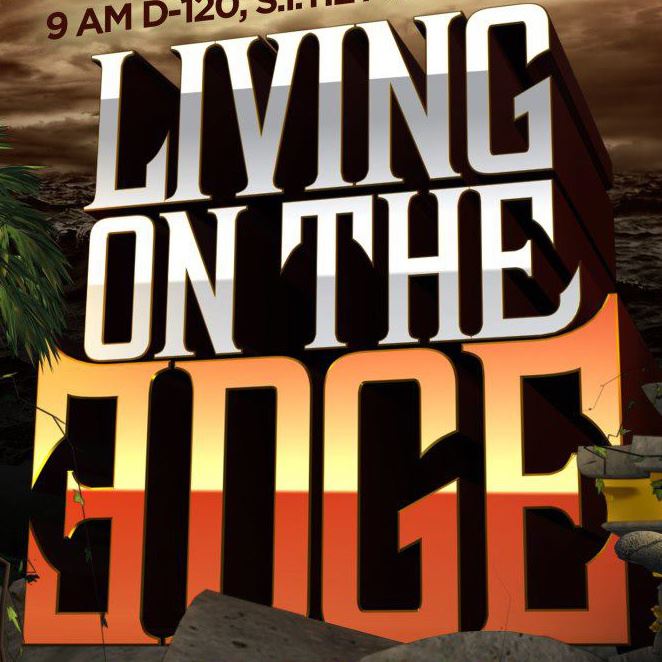
Living On the Edge Main Hoon Shahid Afridi Special


Living on the Edge, S4 - 4th Aug – Ep 25


Zinda Bhaag gets a fall release date 6th September

Cinema: Zinda Bhaag gets a fall release date 6th September

Pakistani feature film Zinda Bhaag has been slated for release in early September, a statement from the film’s promoter said on Wednesday.

The film stars veteran Indian actor Naseeruddin Shah among other actors and has already caused a stir amongst cine lovers with an eye catching trailer.

The release said that Zinda Bhaag will be released on Defence Day, September 6 at screens across Pakistan including in multiplex and single screen cinemas in Karachi, Lahore, Multan, Faisalabad, Gujranwala and Rawalpindi.

“We want to reach mass audiences across Pakistan because the film tells the story of every household,” Mazhar Zaidi, the producer of the film said.

Actor Naseeruddin Shah has been full of praise about the project.

“When I read the script I said to myself that I have to do this film. It’s a role of a lifetime.”

Apart from Shah there is a flurry of fresh faces including Amna Ilyas, Khurram Patras, Salman Ahmed Khan and Zhoib.

Music for the film has been prepared by a star-studded lineup that features Sahir Ali Bagga as composer alongside Rahat Fateh Ali Khan, Abrarul Haq, Arif Lohar and Amanat Ali.

Tuesday, August 6, 2013

Main Hoon Shahid Afridi won’t be bowling you over this Eid

This Eid, the drama is as hot behind the silver screen as it promises to be on screen. In a series of surprising events that have taken the film fraternity by surprise, the makers of Main Hoon Shahid Afridi (MHSH) have decided to delay the release of the film which was slated for Eid. Shehzad Rafique’s Ishq Khuda and Iram Parveen Bilal’s Josh are still scheduled for an Eid release, but the most anticipated Pakistani film this year, MHSH is taking its time to hit the box office.

While producer Humayun Saeed is currently not in Pakistan, the film’s writer Vasay Chaudhry tells The Express Tribune that some last minute problems arose. Azam Khan, a well-known film editor who owns the post production house Xperts, passed away during the fine-tuning of MHSH.

“It was really sad for everyone. To troubleshoot, we had to rush abroad to continue the post-production process but unfortunately, we wouldn’t have received the final prints on time,” says Chaudhry.
This, however, is not the only hurdle for MHSH. At the eleventh hour, the previous understanding between distributors and film-makers that no Indian film will be imported on Eid has suddenly been overruled.

While the newspaper ads of MHSH and Bollywood flick Chennai Express read “releasing on Eidul Fitr” and “coming soon” respectively, The Express Tribune has learnt that the latter will be taking MHSH’s slot during the Eid break.
Chaudhry admits that stiff competition from the Shahrukh Khan-starrer is a reason for the delay; Chennai Express has the killer combination of King Khan and Rohit Shetty, a director who has never flopped at the box office.

“Whether you like it or not, we are not ready or willing to compete with a big budget Shahrukh Khan film,” he says.  He adds that he is disappointed and shocked that no one from Lollywood has made an issue of this sudden move to allow Indian films.

“I am surprised that no one from Lollywood or the Film Producer’s Association has said anything about this issue — especially Mr Syed Noor, who is the biggest advocate of banning Indian films in Pakistan and often rambles about it on television,” says Chaudhry. When contacted, Syed Noor said he could be surprised if Indian films were screened on Eid as distributors had given him their word.

While IMGC Entertainment is bringing Chennai Express to Pakistan, Satish Anand of Eveready Pictures is importing yet another expected blockbuster, Once Upon a Time in Mumbai Dobara, which is eventually expected to give MHSH a tough time at the box office.

“We want all these films to have good business because they are supporting the cause of Pakistani cinema,” says Satish Anand. “It is very unfortunate that Main Hoon Shahid Afridi will not be screening on Eid because it takes away the comfort and initial business that any film is supposed to receive on Eid.”

However, Nadeem Mandviwalla, who’s company Mandviwalla Entertainment is distributing MHSH, feels otherwise. “Eid has its advantages and disadvantages, so if a film has to do business it will do so before or after Eid,” he says. He also believes that, given the circumstances, delaying MHSH is the wisest decision as it now has more time for pre-release events and promotions.

“Pakistani films are very personal to the public and they want to see the stars talking about the film,” he continues. “All of this couldn’t have been possible by Eid. The anticipation for Main Hoon Shahid Afridi has already been built up. We can keep building it for another couple of weeks.”


The delay in MHSH has definitely disappointed many cinema goers, who were ready to buy tickets on Eid but will now have to wait for a few weeks. This delay may just be a blessing in disguise for Josh, but only if people treat it as a separate Pakistani film and not a secondary option to Chennai Express.

A Return to Cinema - The Pakistani Cinema


What is the New Wave? Apart from being an overused cliché, the phrase was originally used to describe a new movement in French cinema in the 1950s, when a group of filmmakers – many of them former film critics – ushered in revolutionary approaches to conceiving, producing and making films.
The movement itself was the coming of age of the cinematic form itself, and similar ‘New Waves’ were described in Iran, Mexico, Portugal, Brazil, Czechoslovakia and even Hollywood.

Unfortunately, much like Che Guevara going from an icon of revolution to a popular T-shirt, the term New Wave is now loosely used in any film industry whenever a clutch of films challenging the orthodoxy are released in quick succession. The problem with such usage is that it ignores the fact that a moment like the coming of a ‘New Wave’ occurs as part of a crescendo of changes not just in films, but also more generally in society, culture and the arts.

So, can we begin to speak of any new waves in Pakistan’s much-lamented film industry? There is a great desire for the answer to be yes, simply because even with a barely functioning film industry, Pakistanis are voracious fans of cinema. The fact that we now have a slow but steady drip of new, Pakistani films has stoked the appetite of cinephiles all over the land.

But perhaps it is too soon to be trumpeting any New Waves, mainly because there is little orthodox tradition left to be challenged, and also because the current surge in films is more a consequence of technical, commercial and infrastructural changes than any new ideology. That said, it would be callous to downplay this moment as well, because what we are witnessing is worthy of appreciation.

So instead of a New Wave, or the even more abused term Revival, let me christen this moment the Return of Cinema to Pakistan. To catalogue and understand this Return, I spoke to four directors about their films and their ambitions, to try and see what we can expect on our screens in the coming months.

--

Bilal Lashari was one of the last entrants of what was probably a golden age of music videos in Pakistan. A range of directors, often armed with film degrees from abroad, took advantage of Pakistan’s evergreen music scene as well as the arrival of a multitude of new channels, equipment and technical staff to usher in a flurry of creativity.

However, as the stakes and the commercial potential of the electronic media continued to rise, many of these directors moved over to the cash cow of shooting advertisements and commercials. It is here that Lashari chose to buck the trend by throwing himself headfirst into making a film.

When I spoke to him, he had spent the past 18 months working without break. During this time, he had already spurned a host of lucrative opportunities to makes ads or return to music videos, and in a way had put his entire reputation at stake. It was little surprise then that the word he used to sum up his experiences was ‘sacrifice’.

Thankfully for him though, Bilal’s debut film ‘Waar’ is set to premiere, according to reports online, on the 6th of September. Starring Shaan in the lead role, it is a tale of counterterrorism and militancy.

When I first heard of this premise, I was cautious. For starters, Bilal’s music videos had always struck me as being technically and aesthetically superb, but guilty of wearing foreign influences too heavily. Jal’s award winning Sajni his narrative was very much from the Grimm Brothers, while Mekaal Hasan Band’s Chal Bulleya brought in the seven sins, a concept not readily accessible in the local context.
Moreover, there had been rumors of investments by American studios and funding by the ISPR, and I had feared that a bright, young director was unwittingly going to churn out a propaganda piece.

But Bilal’s response to these questions belied a director tired of batting away such suggestions.

“The film is shot in a realistic (translation: non-South Asian) style, and is at its heart an action movie. It’s not about the Army, and it has not been funded by any American studio or enterprise. The story is actually about a police officer, and is meant to entertain above all else.”

And what about the ISPR funding? “In order to go shoot at some of the locations we needed to, we had to enlist the Army’s help. There is no way of accessing those locations otherwise, and that’s true for anyone in the industry.”

In essence, Bilal’s background and the premise of this film doesn’t suggest some searing indictment of our counterterrorism policy, but it does suggest the arrival of a modern action flick, set in a suitably fantastical yet cinematically appropriate context – and not a moment too soon.

--

Coming in around the same time as Bilal’s Waar will be Meenu Gaur and Farjad Nabi’s Zinda Bhaag. The two directors though are quite atypical in terms of their background when the Pakistani scene is considered, but that may well be their strongest advantage.

Farjad and Meenu have been part of Matteela Films, and have been making critically acclaimed documentaries on topics from Nusrat Fateh Ali Khan to the history of the food available in Karachi.

Their decision to make a film was both a result of their passion for cinema, but also an attempt to identify and revitalize the existing Pakistani film tradition. Their primary impulse was to make a film not only organic to the local scene, but also one that sought to move past the creative stifling that had marred the industry. Farjad spoke about how the story – about a group of young Pakistanis trying to immigrate abroad through dubious means – was begging to be made. “These tales – which all of us hear from relatives and acquaintances – were so remarkable that all you needed to do was put them on the screen and it became cinema.”

Fascinatingly, the two embarked on a process which was closest to the tradition of European auteur directors, although one they felt arose more out of production exigencies than artistic sensibilities. They hired non-professionals with lives very similar to the characters, threw them into intensive workshops, and filmed them with the liberty to improvise as they went along. As Meenu explained, the film became a text informed by the efforts of the entire crew.

The obstacles they faced did not come from the censors or distributors. Instead, the film’s producer Mazhar Zaidi spoke of a missing political economy, a lack of infrastructure. The few cameras in the country go to advertisements, the equipment for dubbing sound or processing film doesn’t exist, and technical crew has to be flown in from abroad. When Zinda Bhaag enlisted an Indian rather than a Far Eastern crew, it had to face the inevitable India-bashing that many of us revel in.

But by making this film, they have set up a template for not only what a Pakistani film can look like, but also how to make one.

--

Lastly, I spoke to Jami, a name that looms large over the visual history of the past decade or so. One of the country’s most popular and acclaimed directors, his films have been rumors floating in the ether. Fans of his videos have long felt he had the vision and expertise needed to create THE Pakistani film. So why hasn’t that happened yet?

Speaking to Jamshed Mehmood, as he is also known, I felt a theme developing. If Bilal is the l’enfant terrible and Meenu and Farjad the wise, grounded aesthetes, then Jami is a gentle yet powerful patriarch, involved as much in making films as he is in setting up an industry.

 In his 15 or so years, he has been able to set up a creative economy, training new people and introducing new equipment and infrastructure. His team has been involved in Zinda Bhaag, Extortionist, Rafina and Josh the film, as well as his own two efforts Morqaye and Downward Dog.

He was laughing when he explained how setting up the infrastructure for sound recording and mastering was like building an Airbus plane, and insisted that it was far better that it took all this time to set up the industry’s basics, so that its creative potential could be realized.

“There is little doubt that the future of the industry will follow the Bollywood item-number fish market, and crazy sleaze will fly as the likes of construction companies start producing films. But we have enough directors and talent to keep alternative cinema alive through that, which is my basic hope.”
Jami’s two films are diverse and terribly exciting. Morqaye is an epic journey of a Pakistani railway station master and his family, while Downward Dog is a black and white film noir set in the Karachi of the future. Incredibly, the two films almost bankrupted the successful filmmaker before he managed to find producers for himself. After such a long wait though, it seems that the time for the harvest is nigh.

--

Perhaps now it is clearer why we should be referring to a Return when we speak of these films, as well as the others coming to our screens. They don’t have a lot in common in style or ambition, and are not part of some conscious social thought either.

But what they are doing is repopulating the cinematic imagination. We need a new, larger-than-life action hero, we need a film that can amplify rather than reject our film tradition, we need a daring vision to be backed up by skilled creative personnel. We need all these things to create a cohesive sense of identity for Pakistani cinema, one that can create the bedrock upon which future, newer waves can crash upon. The journey is a long one, but Pakistani cinema is now beginning to walk down it.


Article By : Ahmer Naqvi (Dawn)
 DESCRIPTION-OF-AD  DESCRIPTION-OF-AD